
Top 10: Global FinTech Hubs

Global fintech has become a truly borderless industry, with innovation and capital flowing rapidly between mature markets and fast‑growing emerging economies.
Payments, neobanking and digital infrastructure are now built for global scale by default, enabling consumers and businesses to transact almost instantly across currencies and jurisdictions.
The hubs below stand out as some of the fastest‑growing and most successful because they combine deep financial sectors, engineering talent and pragmatic regulators that actively engage with new business models.
Together, they host many of the world’s most influential fintech founders and platforms, whose products shape how money moves in 2026.
10. Sydney
- Home to: Afterpay
- CEO: Nick Molnar
Nick Molnar co‑founded Afterpay in Sydney in 2014, helping to pioneer the modern buy now, pay later model aimed at younger, credit‑averse consumers.
Afterpay’s rapid merchant adoption and global reach culminated in its roughly US$29bn all‑stock acquisition by Block, Inc., one of the largest fintech deals to date.
This transaction cemented Sydney’s profile as a launchpad for scaled consumer‑finance innovation and showed how an Australian startup could influence retail payments globally.
9. Dubai
- Home to: Tabby
- CEO: Hosam Arab
Hosam Arab’s Tabby has become one of the Gulf region’s standout consumer finance platforms, offering instalment payments and shopping services to a growing user base.
By early 2025, Tabby’s funding round at about US$3.3bn signalled strong investor conviction in its model and in Gulf fintech more broadly.
Operating from a market anchored by Dubai’s international financial centre and regional connectivity, Hosam’s company illustrates how Middle Eastern founders are building home‑grown alternatives to global BNPL brands.
8. Tel Aviv
- Home to: Rapyd
- CEO: Arik Shtilman

Rapyd was founded in Tel Aviv in 2016 by Arik Shtilman, Arkady Karpman and Omer Priel. Their goal was to solve a critical infrastructure problem: giving businesses access to local payment methods worldwide through a single platform.
Since then, the company has expanded globally from its Tel Aviv origins, with teams and offices in multiple regions including Israel, which remains a key part of its operations and legacy. Its corporate headquarters, and primary base for global leadership and operations, is now in London.
Instead of focusing on consumer apps, Rapyd specialises in behind‑the‑scenes connectivity to bank transfers, e‑wallets and cash networks across many countries.
A 2025 funding round valuing the firm around US$4–4.5bn underscores its importance within the global payments stack and highlights Tel Aviv’s strength in complex, security‑sensitive financial technology
7. Bangalore
- Home to: PhonePe
- CEO: Sameer Nigam

Sameer Nigam helped turn PhonePe into one of the most influential players in India’s digital payments revolution.
Built on the Unified Payments Interface, PhonePe handles a leading share of UPI transactions by volume and value, serving hundreds of millions of registered users nationwide.
This scale shows how a mobile‑first platform can reach mass adoption in a large, price‑sensitive market, and it has made Bangalore synonymous with high‑volume, low‑cost payment innovation
6. São Paulo
- Home to: Nubank
- CEO: David Vélez
David Vélez founded Nubank in São Paulo to challenge high‑fee, cumbersome banking services in Latin America with a simple, app‑first experience.
Since then, Nubank has grown into one of the world’s largest digital banking platforms, serving more than 118 million customers across Brazil, Mexico and Colombia by early 2025.
Its listing on the New York Stock Exchange and strong revenue growth have turned David into a prominent figure in global fintech, and solidified São Paulo as a leading hub for financial inclusion at scale.
5. Hong Kong
- Home to: Airwallex
- CEO: Jack Zhang
Jack Zhang co‑founded Airwallex in 2015 to simplify cross‑border payments for businesses, reducing the complexity and cost of operating globally.
The company has since built a broad suite of services, from multi‑currency accounts to global collections and payouts, with significant operations in Hong Kong and Singapore.
A US$300m Series F round in 2025 at about US$6.2bn valuation showed sustained investor belief in its model and highlighted Hong Kong’s ongoing role as a gateway for Asia‑focused fintech infrastructure.
4. San Francisco
- Home to: Stripe
- CEO: Patrick Collison
Patrick Collison, who co‑founded Stripe with his brother John, has become one of the most recognisable figures in fintech by focusing relentlessly on developer‑friendly payment tools.
Stripe’s APIs allow companies of all sizes to accept payments and manage complex billing with minimal friction, making it a foundational layer for thousands of internet businesses.
Industry reports consistently describe Stripe as processing hundreds of billions of dollars in annual payment volume, underscoring both its scale and the centrality of San Francisco’s engineering ecosystem to global financial infrastructure
3. Singapore
- Home to: Grab (GrabFinancial)
- CEO: Anthony Tan

Anthony Tan’s Grab began as a ride‑hailing app but, from its Singapore headquarters, has evolved into a regional super‑app with a substantial financial services arm.
Through GrabFin and associated digital banks, Grab offers wallets, payments, lending and insurance to consumers and small businesses across several Southeast Asian markets.
Singapore’s regulator supports this kind of innovation through a fintech sandbox and digital bank licences, giving companies like Grab a clear framework to scale new services.
Tan’s strategy of embedding finance into everyday services has turned Grab into a flagship example of how super‑apps can broaden financial access while remaining commercially significant.
2. New York
- Home to: Mastercard
- CEO: Michael Miebach
Michael Miebach leads Mastercard, one of the world’s largest payments networks, from its base in the New York metropolitan area.
Under his leadership, Mastercard has invested in cybersecurity, tokenisation, data analytics and open‑banking‑related services to stay central to digital payments.
New York’s position as a global financial centre gives Mastercard proximity to major banks, merchants and capital markets, reinforcing its influence over how electronic transactions are routed and secured worldwide.
This combination of incumbent scale and ongoing technology investment makes both the company and its home city pivotal to the broader fintech landscape
1. London
- Home to: Revolut
- CEO: Nik Storonsky
Nik Storonsky co‑founded Revolut in London, where it has grown from a travel‑focused card and foreign exchange app into one of Europe’s most valuable private fintech firms.
A 2025 secondary share sale valuing Revolut at about US$75bn reflects strong investor confidence in its multi‑product model, which spans accounts, cards, trading and business services.
London’s established financial sector, the UK’s regulatory sandbox and open‑banking rules have provided fertile ground for this kind of experimentation and rapid scaling.
Storonsky’s ambition to build a global financial super‑app, combined with London’s ecosystem, keeps both the company and the city at the forefront of digital finance.










Executives
Anthony Tan
CEO and Co-founder
Arik Shtilman
CEO
David Vélez
Founder and CEO

Hosam Arab
Co-founder and CEO
Jack Zhang
Co-Founder & CEO
Michael Miebach
Chief Executive Officer
Nick Molnar
CEO and Co-founder of Afterpay. Global Head of Sales & Marketing Block - Square, Afterpay, Cash App

Nik Storonsky
Founder & CEO
Patrick Collison
CEO
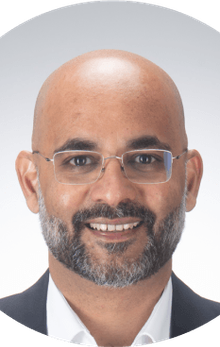
Sameer Nigam
Founder & CEO