Why has Donald Trump Sued JPMorgan Chase?
US President Donald Trump is to file a lawsuit against JPMorgan Chase for US$5bn, saying that it illegally closed his accounts.
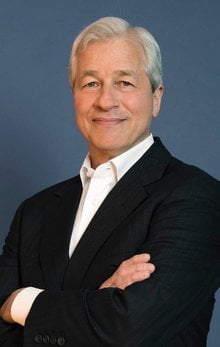
His lawsuit personally names the bank’s chief executive Jamie Dimon - with whom he has had a difficult relationship.
It alleges that Trump - and his business empire - suffered what he calls “considerable financial and reputational harm” following the bank closing their accounts in January 2021.
This followed the 2021 riot when Trump supporters descended on the US Capitol to disrupt formal ratification of the election results.
JPMorgan Chase argues that the suit “has no merit”, and adds that the bank “does not close accounts for political or religious reasons.”
It adds that it does close accounts because they create legal or regulatory risk for the company.
"We have been asking both this administration and prior administrations to change the rules and regulations that put us in this position, and we support the administration's efforts to prevent the weaponisation of the banking sector," it says in an official press release published on 22 January.

Trump has not had a smooth relationship with Jamie Dimon, who has spoken out against the Trump administration’s proposal to cap credit cards, his immigration policy and his approach towards the Federal Reserve.
Trump has taken on the financial services sector before for closing accounts, and ordered a review into the practice.
Shares in JP Morgan slipped on news of the lawsuit but subsequently bounced back.
A platform for very different viewpoints
Both Trump and Jamie Dimon have been active at the World Economic Forum’s Annual Meeting in Davos, Switzerland, where the world’s leading government and business leaders gathered for a week of discussions from 19 January.
Jamie used the Annual Meeting to label Trump’s credit card cap plans as an “economic disaster”.
A succession of world leaders have been given the stage in Davos, expressing very different opinions on politics and economics.
Trump discussed trade and tariffs - and also Greenland - but also touched on the development of AI, nuclear power, housing affordability, migration and pandemics.
The Green Party in Switzerland has objected to Trump being given a speaking opportunity at Davos, but Alois Zwinggi, managing director of the World Economic Forum has defended his presence saying that the event must be “an impartial platform for the competition of ideas”.
Markets respond with volatility
Trump’s financial services and economic policies have often carried significant market impact.
For example, shares in AmEx, Visa and Mastercard as well as global banks fell following the US President’s statements that he would cap credit card rates at 10% on 9 January.
The share price of American Express fell by 4%, while Visa and Mastercard's dropped more than 2% following his mandate for a 10% one-year cap on credit card interest rates.
When Trump announced his tariff regime, global markets reacted with volatility.
But he has caused specific market segments to rally, too. Trump’s venture into digital assets drove investor confidence following his election in 2024, with the value of Bitcoin surging, as Trump’s views changed from being a cryptocurrency sceptic to an active market participant.
Through his business empire, he has since dived deeper in crypto, with Trump Media & Technology Group entering into a definitive agreement to establish a US$6.42bn digital asset treasury company.
Jamie Dimon has been at the helm of JP Morgan Chase for more than 20 years. He has often been urged to run for the position of US President, but has distanced himself from the idea.
Company portals


Executives
Jamie Dimon
Chairman of the Board