

How Lloyds is Using Agentic AI to Fight Fraud In Real Time
Lloyds Banking Group is scaling its use of AI to tackle one of financial services’ most persistent and costly challenges: fraud.
With more than £1bn (US$1.3bn) of fraud prevented in 2025 and £100m (US$133.8m) invested in new fraud technology since 2023, the group is at the forefront of AI-driven financial crime prevention.
At the core of Lloyds’ strategy is a newly deployed agentic AI system designed to enhance real-time decision-making across its fraud operations.
Built using the Group’s secure AI platform, Envoy, the system has been developed collaboratively by fraud, technology, data and risk teams.

Unlike traditional rule-based systems, agentic AI introduces multiple autonomous agents working simultaneously behind the scenes.
These agents perform tasks such as identity verification, transaction monitoring and scam risk analysis in parallel, significantly accelerating response times.
Crucially, the system is embedded into tools already used by frontline colleagues, allowing them to act quickly while maintaining oversight.
This approach ensures that technology augments, rather than replaces, human judgement.
Ramp Bets on AI to Redefine Modern Spend Management
Ramp is continuing to build momentum in its drive to help businesses cut costs and improve efficiency.
By May 2026, the typical Ramp customer was saving 50% more money and 32% more time compared to the previous year, with customers using the full platform suite seeing those savings increase to more than double.

This sharp increase in value has been fuelled by rapid product innovation.
Over recent months, Ramp has rolled out more than 70 new products and features, completed the strategic acquisitions of Billhop and Juno to support its planned expansion into Europe and strengthened its partnership with Visa to allow AI agents to carry out autonomous corporate payments.
The company also revealed a US$750m primary funding round led by ICONIQ, GIC and Ontario Teachers' Pension Plan, bringing its valuation to US$44bn.
New backers include Goldman Sachs Alternatives, D.E. Shaw & Co., Morgan Stanley Investment Management, Generation Investment Management, Insight Partners and BroadLight Capital.
How AI Technology Could Help Women in Financial Services
Women hold 42% of roles in financial services but remain underrepresented in leadership positions.
Research from Nationwide, Bain & Company and Cambridge Judge Business School examines how AI could reshape progression pathways for female professionals in the sector.
The paper suggests AI could address gender imbalances rather than reinforce existing inequalities.
The technology could transform recruitment processes, leadership development and career advancement across financial services organisations.

How NTT DATA and AXS Advance Cross-Border Payments in Asia
NTT DATA and AXS are working together to advance cross-border payments infrastructure in Asia.
The pair have signed a Memorandum of Understanding (MoU) to explore interoperable bill payment capabilities between their respective networks.
The partnership reflects a growing industry push to simplify cross-border financial interactions for consumers managing obligations across multiple jurisdictions.
The collaboration will initially focus on Singapore and Malaysia – two highly connected markets with strong demand for seamless payment experiences.

The agreement is built on a shared ambition to enable interoperability between domestic bill payment platforms.
By linking AXS’s extensive Singapore-based ecosystem with NTT DATA’s regional payment infrastructure, the companies aim to allow users to pay overseas bills through familiar, local channels.
Under the proposed model, e-pay (M) Sdn Bhd (e-pay) – operating under NTT DATA Payment Services in Malaysia – will act as the access point for Malaysian billers.
In Singapore, AXS will provide connectivity through its established network, spanning digital platforms and a nationwide footprint of self-service kiosks.
AXS will also serve as the orchestration layer, enabling a single secure connection through which participating ecosystems can access a broader network of bill payment services.
This model is designed to scale, allowing future partners to integrate into the platform as the network expands.
How Airtel Africa is Scaling Fintech While Cutting Emissions
Airtel Africa continues to scale its telecoms and fintech infrastructure across 14 sub-Saharan markets, while keeping its environmental impact broadly stable.
Operating in areas where energy access is often limited, the company approaches sustainability as an integral part of day-to-day operations rather than a standalone compliance exercise.
In many locations lacking reliable national grid connectivity, Airtel Africa has historically depended on diesel generators to maintain network uptime.
During 2025/26, however, the company transitioned 390 off-grid sites onto grid power, taking its total number of grid-connected sites to more than 21,500 out of a portfolio exceeding 40,300 assets.
These improvements, alongside the deployment of 176 lithium-ion batteries and enhanced cooling technologies, contributed to a reduction of 9.1 million litres in diesel usage over the year.
As a result, Scope 1 and 2 emissions reached 136,133 tonnes of CO₂-equivalent, marking a modest 1.6% year-on-year increase.
This represents a notable deceleration compared to the 4.3% rise recorded in 2024/25, despite continued network expansion.
At the same time, emissions intensity has fallen by 20% against a 2022 baseline, supporting progress towards the company’s target of a 62% reduction by 2032.
“Across Africa, access to connectivity, financial services and digital education is increasingly essential to economic opportunity,” says Sunil Taldar, CEO of Airtel Africa.
“Sustainability remains embedded in how we operate and grow our business. By improving energy efficiency and reducing reliance on diesel, we’re strengthening operational resilience while supporting long-term sustainable growth.”







Executives

Ron van Kemenade
Group Chief Operating Officer
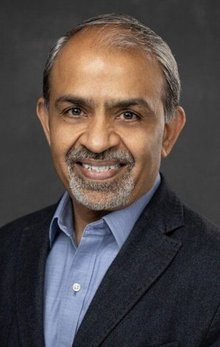
Sunil Taldar
MD and CEO