
Digital Growth: How BNPL Giant Klarna Achieved IPO Listing
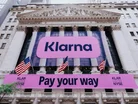
Showing aggressive digital growth over the last five years, Klarna has announced its IPO listing on the New York Stock Exchange (NYSE), with share prices currently valued at US$40.
The announcement comes after reports emerged earlier in the month that the company would be filing for an IPO after its attempt earlier this year.
Klarna is expected to begin trading the shares on the New York Stock Exchange on 10th of September 2025.
Trading under the symbol ‘KLAR’, Klarna has listed 34,311,274 ordinary shares that are available.
5,000,000 of the shares are to be sold by Klarna directly, with the remaining 29,311,274 shares set to be sold by permitted shareholders.
Klarna is expected to close the offering on the 11th of September 2025, dependent on the satisfaction of the customary closing conditions.
A prospectus with details is available on the SEC website.
Who is involved in Klarna’s IPO bid?
Supporters of the buy-now-pay-later (BNPL) giant are extensive.
Joint book-running managers have been named as Goldman Sachs & Co. LLP, J.P. Morgan and Morgan Stanley.
Bookrunners also include BofA Securities, Citigroup, Deutsche Bank Securities, Societe Generale and UBS Investment Bank.
Further support comes from BNP Paribas, Keefe, Bruyette & Woods, A Stifel Company, Nordea, Rothschild & Co, Wedbush Securities and Wolfe | Nomura Alliance. All act as co-managers for the offering.
A greenshoe option has also been offered to underwriters.
A 30-day option has been given to underwriters for the purchase of up to an additional 5,146,691 ordinary shares.
Klarna has stated that this is to cover over-allotments, however, the company is not set to profit from any ordinary shares sold by the selling shareholders.
Why is this significant for Klarna?
Founded in 2005, Swedish fintech has grown into a major player in the fintech space.
Recently named as one of the top 10 fintech companies, Klarna has revolutionised the BNPL space for consumers and businesses.

At its core, Klarna offers shoppers flexible payment solutions at the checkout.
For merchants, integrating Klarna as a payment option can lead to increased sales and customer loyalty.
The retailer receives the full payment for the goods upfront from Klarna, which then assumes the responsibility and credit risk for collecting the payments from the customer.
In 2017 Klarna became a fully licensed bank, followed shortly by its launch of the Klarna app in 2018.
Expanding on Klarna’s digital growth strategy, the app allowed consumers access to tools including those for online shopping, money management, and seamless online payment.
Global digital growth
Since then, the app has been rolled out globally, providing convenient services to customers and businesses.
Klarna has even launched a physical card for UK customers in a partnership with Visa and launched a mobile service in the US.
Recently, Klarna signed a deal to support existing growth of its pay-in-4 scheme to the US, allowing shoppers more financial flexibility.
The fintech, which surpassed unicorn status in 2012, also expanded its US partnerships by pairing with delivery giant DoorDash, again scaling its BNPL options.
Klarna’s Artificial CEO
Klarna embraced AI as part of its growth strategy, leveraging the platform to appear as the CEO to customers wishing to submit feedback.
Sebastian Siemiatkowski, Klarna’s CEO, was the model for the AI tool. It was fed personal information and trained on his voice to appear as authentic as possible.
Customers can submit ideas, ask questions and provide feedback through a phone call to the AI-CEO.
Real-time AI transcripts are analysed and summarised before being forwarded to an internal information flow.
From there, it is accessed by product and development teams. This feedback service holds potential for changes to be made within 24 hours, challenging traditional manual banking feedback.