
Market Decline Deepens as US Tariffs Hit Cross-Border Trade

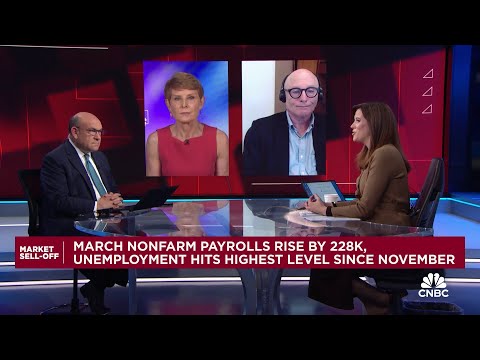
Global financial markets are in turmoil following a dramatic sell-off triggered by extensive new import tariffs implemented by US President Donald Trump.
The S&P 500 teeters on the edge of a bear market, whilst oil prices decline and major stock indices across Asia and Europe have nosedived.
Beneath this market turbulence lies a more profound narrative – the disruption to worldwide supply chains and the consequent strain on industries constructed upon cross-border manufacturing and commerce.
President Trump's resolution to enforce sweeping new tariffs has sent ripples throughout the global economy.
These countries have evolved into vital components within the supply chains of American companies, manufacturing everything from athletic apparel and clothing to electronics and consumer goods.
Vietnam and Bangladesh, two of the world's most rapidly expanding export centres, now confront tariffs of 46% and 37% respectively.
These nations have become essential to American brands such as Nike and Lululemon. According to the Bangladesh Garment Manufacturers and Exporters Association, Bangladesh alone exports US$8.4bn worth of garments to the US annually.
Qian Wang, Asia Pacific Chief Economist at Vanguard, states: "Asia is bearing the brunt of the US tariff hike. This is negative to the global and Asia economy, especially those small open economies, both in the short term and long term."
Asian markets reacted with significant declines; Hong Kong's Hang Seng index fell 12.5%, Taiwan's index dropped 9.7% and South Korea's Kospi fell 5.6%, while Japan's Nikkei 225 closed 7.8% down.
These declines reflect not only apprehension regarding an imminent recession in the US but also the direct impact on regional manufacturers embedded within multinational production networks.
US tariffs unsettle Europe's industrial foundation
European stocks have also suffered, particularly in sectors heavily dependent on global supply networks.
Luxury brands and banks led losses, with shares of LVMH, Kering and Pandora down between 6% and 14%. Burberry, substantially exposed to Asian manufacturing, fell more than 9%. These companies rely on production hubs in Asia and robust demand from US consumers.
Luxury houses are unlikely to relocate production, even with elevated costs, however higher tariffs could suppress demand, compressing margins and altering sales forecasts.
Freight companies also experienced pressure. Danish shipping firm AP Moller Maersk, a crucial player in global logistics, fell around 9%. With goods becoming costlier to transport across borders, shipping volumes could decline, affecting firms that depend on high trade flow.
Defence sectors steady as supply chain concerns mount
Whilst most sectors endured losses, a few found support. Defence and utility stocks remained stable, as investors sought safe havens.
Shares in BAE Systems in the UK and Germany's Rheinmetall rose marginally, despite the broader market slump. European defence firms, benefiting from increased military expenditure, are somewhat sheltered from trade shocks as most defence procurement is domestic.
Nevertheless, even this sector has not escaped entirely. France's Thales, Sweden's Saab and Italy's Leonardo all recorded losses between 2% and 4%, reflecting investor caution amid widespread market instability.
Ben Heelan at Bank of America downplays concerns of long-term impact in this arena: "The tariff impact on European defence stocks was likely to be 'pretty small'."
"We now have five to 10 years runway of growth as we move toward 3% of GDP."
Meanwhile, US oil prices dropped below US$60 a barrel, the lowest in four years. Lower oil costs may appear beneficial for fuel-intensive industries, but they also indicate declining economic activity.
If prices remain depressed, US energy firms may be compelled to reduce operations, curtail spending and eliminate jobs – adding another vulnerability to the global supply chain.
There is now widespread apprehension that this trade dispute, if extended, will impair economic growth across continents. Goldman Sachs has increased the probability of a US recession to 45%, whilst JPMorgan places it at 60%.
And as markets continue to decline, governments have limited time to respond. Tariffs are already in effect and could soon provoke retaliation from trading partners, creating a cycle of protectionism that threatens to damage the fabric of global trade.
Explore the latest edition of FinTech Magazine and be part of the conversation at our global conference series, FinTech LIVE.
Discover all our upcoming events and secure your tickets today.
FinTech Magazine is a BizClik brand