
Top 10: Mobile Wallet Providers
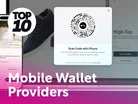
From the seamless tap of a smartphone to the sophisticated QR codes powering entire economies, the digital wallet landscape has evolved into a cornerstone of global finance.
No longer just a digital substitute for leather bifolds, these platforms represent the pinnacle of invisible payments, integrating biometrics, blockchain and buy now, pay later (BNPL) services into single-app solutions.
Innovation is nowadays measured solely by transaction speed, but by how deeply these wallets embed themselves into the daily habits of billions.
From the dominant market shares of Chinese titans like Alipay and WeChat Pay to the hardware-integrated elegance of Apple Pay and the disruptive payment orchestration of Curve, the providers on this list have redefined financial inclusion.
This listicle ranks the top ten based on their financial success, global reach and the technological leaps that keep them at the forefront of the fintech revolution.
10. Digiseq
Company founded: 2014
Based in: London, UK
CEO: Ido Kariti
Digiseq has revolutionised the passive wearable market by turning almost any object – from high-end rings to event key fobs – into a secure payment device.
Its success is driven by its RCO technology, which allows consumers to provision their own devices using a smartphone. This innovation eliminates the need for manufacturers to handle sensitive data, making it a favourite for fashion brands and sporting events like the Rugby World Cup.
By bridging the gap between physical craftsmanship and digital security, Digiseq has become a vital infrastructure provider for the wearable revolution.
9. Garmin Pay
Company founded: 1989 (Garmin) / 2017 (Garmin Pay)
Based in: Schaffhausen, Switzerland
CEO: Cliff Pemble

Garmin Pay remains the dominant choice for the active demographic, integrating seamlessly into a wide range of rugged outdoor and fitness smartwatches.
Its success is rooted in its independence from smartphone operating systems, offering a cross-platform solution that works equally well for iOS and Android users.
Innovation is centred on the platform’s reliability in extreme conditions and its deep integration with transit systems worldwide.
By focusing on a specific, high-intent user base, Garmin has built a loyal ecosystem where the convenience of wallet-free exercise is the primary driver of adoption.
8. AstroPay
Company founded: 2009
Based in: London, UK
CEO: Marc Sacal
AstroPay has carved out a massive niche by focusing on emerging markets where traditional banking infrastructure often falters. Its innovation is centred on the One Touch solution, which allows users to perform instant deposits and withdrawals across hundreds of international sites using local payment methods.
This inclusivity has driven its success in Latin America and Asia. By offering a multi-currency wallet that supports over 200 local payment methods, AstroPay bridges the gap between local cash-based economies and the global digital marketplace, processing millions of transactions for users who were previously underserved.
7. Huawei Pay
Company founded: 1987 (Huawei) / 2016 (Huawei Pay)
Based in: Shenzhen, China
CEO: Ren Zhengfei

Huawei Pay’s success is intrinsically linked to the expansion of the HarmonyOS ecosystem.
It utilises Security Element (SE) chip technology to provide hardware-level encryption for every transaction, making it one of the most secure mobile payment options available. Its innovation extends to the all-in-one card feature, which integrates public transport cards, access badges and credit cards into a single digital entity.
By focusing on deep hardware integration, Huawei Pay offers a frictionless experience that works even without an active internet connection, ensuring reliability across the vast infrastructure of its primary Asian markets.
6. Curve
Company founded: 2015
Based in: London, UK
CEO: Shachar Bialick
Curve has seen a meteoric rise following its US$162m acquisition by Lloyds Banking Group in late 2025.
Its core innovation is payment orchestration, allowing users to consolidate every card they own into one smart card and app. The Go Back in Time feature, which lets users switch the card they used for a past transaction, remains a unique market disruptor.
Under the Lloyds umbrella, Curve has transitioned from a niche fintech tool to a mass-market financial control centre, allowing millions of users to manage their entire financial footprint through a single, intuitive interface.
5. Samsung Pay
Company founded: 1938 (Samsung Group) / 2015 (Samsung Pay)
Based in: Suwon, South Korea
CEO: TM Roh
Samsung Pay’s success is driven by its integration into the Samsung Wallet, which houses digital keys, boarding passes and even cryptocurrency. While it initially gained fame for MST technology, its current innovation lies in the Knox security suite, which provides real-time hacking monitoring.
By positioning itself as a secure vault for more than just money, Samsung has maintained a high retention rate among Galaxy users. Its financial success is further bolstered by the Samsung Rewards programme, which incentivises every tap, turning routine payments into a gamified loyalty experience for its global user base.
4. Amazon Pay
Company founded: 1994 (Amazon) / 2007 (Amazon Pay)
Based in: Seattle, Washington, US
CEO: Andy Jassy

Amazon Pay thrives by leveraging the popularity of the retail giant. Its core innovation is the ability to use the stored payment and shipping information from an Amazon account to pay on thousands of external websites. This reduces checkout friction significantly, as users do not need to create new accounts or share financial details with unknown merchants.
Furthermore, the integration with Alexa allows for voice-activated payments, a frontier that Amazon continues to dominate in the smart-home era. This ecosystem-led approach has made it an essential tool for both merchants and convenience-seeking consumers globally.
3. Google Pay
Company founded: 1998 (Google) / 2018 (Current iteration)
Based in: Mountain View, California, US
CEO: Sundar Pichai
Google Pay’s success is built on the ubiquity of the Android operating system and its sophisticated, data-driven approach to personal finance.
A major innovation is the platform's ability to act as a financial aggregator, meaning it can automatically categorise spending and retrieve receipts from a user’s Gmail.
By embracing the Unified Payments Interface (UPI) in markets like India, Google Pay has facilitated a digital revolution, allowing for instantaneous, zero-fee bank transfers via QR codes.
Its ability to simplify complex banking back-ends into a clean, rewarding interface has earned it a dominant position in the global fintech hierarchy, especially within emerging digital-first economies.
2. WeChat Pay
Company founded: 1998 (Tencent) / 2013 (WeChat Pay)
Based in: Shenzhen, China
CEO: Pony Ma
WeChat Pay represents the pinnacle of social-first fintech. Originally a messaging app, its genius was the digitisation of the Red Envelope tradition, which transformed peer-to-peer (P2P) transfers into a viral social phenomenon.
Today, it is a comprehensive super-app with over 1.3 billion users. Its Mini Programmes allow users to hail taxis, book medical appointments and pay bills without ever leaving the app.
Its financial success is anchored in this high-frequency usage, processing trillions of dollars in transactions annually. By embedding payments into a social framework, WeChat Pay has become an inseparable part of daily life, proving that the most successful wallets are lifestyle engines.
1. Apple Pay
Company founded: 1976 (Apple) / 2014 (Apple Pay)
Based in: Cupertino, California, US
CEO: Tim Cook
Apple Pay sits at the summit of this list as the most successful digital wallet outside of China. Its success is rooted in the Privacy by Design philosophy, which means that Apple does not track what users buy or share actual card numbers with merchants.
By using FaceID and TouchID for authentication, it has made secure payments faster and more intuitive than any physical alternative.
The recent global rollout of Apple Pay Later and the integration of high-yield savings accounts within the Wallet app have turned it into a full-service financial hub. With its massive hardware ecosystem and unparalleled brand loyalty, Apple Pay remains the gold standard for secure, frictionless mobile commerce in 2026.
Company portals









Executives
Andy Jassy
President and CEO

Clifton Pemble
CEO

Ido Kariti
CEO

Ma Huateng
CEO

Marc Sacal
CEO

Ren Zhengfei
Founder and CEO

Shachar Bialick
CEO and Founder
Sundar Pichai
CEO
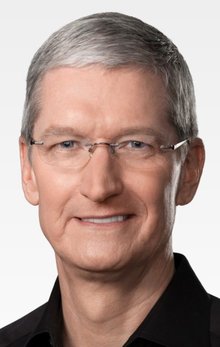
Tim Cook
Executive Chairman

TM Roh
President and Acting Head of the Device eXperience DX Division