
Why are Banks Hesitant About Anthropic's Claude Mythos?

Claude’s latest project, Mythos, has uncovered security concerns as finance ministers call for more investigation into the project and its impact on the financial services sector.
After its early unveiling to selected tech giants revealed “high-severity vulnerabilities”, Anthropic formed Project Glasswing.
It also stated that the vulnerabilities were found in “every major operating system and web browser”.
In an interview with the BBC, Canadian Finance Minister François-Philippe Champagne explained that Mythos has been a topic of mass discussion at the International Monetary Fund meeting in Washington DC.
“Certainly it is serious enough to warrant the attention of all the finance ministers,” he says.
“The difference is that the Strait of Hormuz – we know where it is and we know how large it is... the issue that we're facing with Anthropic is that it's the unknown unknown.”

The coalition unifies major industry players including AWS, Apple, Broadcom, Cisco, CrowdStrike, Google, JPMorganChase, the Linux Foundation, Microsoft, NVIDIA and Palo Alto Networks in an effort to secure critical software.
The company states that Project Glasswing is an “urgent” attempt to use Mythos for defensive purposes.
Declaring this as a turning point in cybersecurity, Palo Alto Network Chief Product & Technology Officer Lee Klarich says that he expects “the most consequential shift with frontier AI models is the move from AI-assisted to AI-driven attacks”.
He adds: “Attackers will build autonomous attack agents that dramatically compress attack cycle times.
“What once took days or weeks of skilled manual effort will soon be executed in minutes.
"This democratisation of advanced attack capabilities means that defenders must match that speed with near-real-time detection and response, which is only possible with extensive AI and automation throughout security operations.”
Mythos’ ability to find bugs extended as far as discovering a now-patched 27-year-old bug in OpenBSD.
The BBC reports that top bankers will be given access to Mythos, with executives from the Bank of England and Barclays weighing in with opinions.
Speaking with the BBC, Governor for the Bank of England Andrew Bailey says: “We are having to look very carefully now what this latest AI development could mean for the risk of cyber crime.
“The consequence could be that there is a development of AI, of modelling, which makes it easier to detect existing vulnerabilities in sort of core IT systems and then obviously cyber criminals – the bad actors – could seek to exploit them.”
Earlier in the year at Davos, Head of Economics Research at Barclays Investment Bank Christian Keller said “the big promise of AI: the already-happening investment boom and the promise of future productivity growth”.
The potential for AI was always split between advancements and hindrances, as fintechs globally see an increase in the use of AI in cases of fraud.
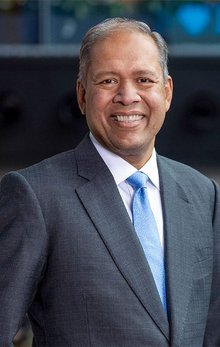
In another comment to the BBC, Barclays CEO CS Venkatakrishnan says: “It's serious enough that people have to worry.
“We have to understand it better, and we have to understand the vulnerabilities that are being exposed and fix them quickly.”
Project Glasswing aims to secure what Anthropic terms as the “worlds most critical software” to prevent “severe” economic fallout.
Company portals



Executives

Andrew Bailey
Governor of the Bank of England
C.S. Venkatakrishnan
Group CEO
Lee Klarich
Chief Product & Technology Officer and Board Member