What JPMorgan Appointments Mean for its Succession Strategy

How do you plan for succession when the leader of a bank has held the role for two decades and shows little intention of stepping aside?
JPMorgan Chase offered its most definitive signal yet – though it did not come without consequence.
On 25 June, the bank appointed Doug Petno and Troy Rohrbaugh as co-presidents, effective immediately, placing the pair firmly at the front of the long-running race to succeed Jamie Dimon.
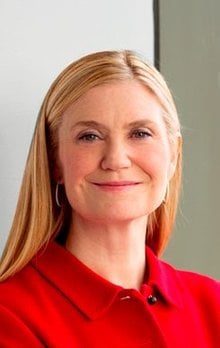
Marianne Lake, a 25-year JPMorgan veteran previously considered a leading contender, has also confirmed she will step down.
In an official statement, Jamie described the changes as "an important step in our Board's thoughtful process around succession planning", adding that he has "never been more excited about the future of JPMorganChase".
Exit of a front-runner
Marianne’s departure is likely to prompt reflection across talent committees.
She joined the firm in the late 1990s and served as Chief Financial Officer between 2013 and 2019, a tenure marked by record profits and the challenges of a pandemic.
More recently, she led the consumer and community bank, the company’s largest division by customer base.
For years, Marianne featured on every shortlist for the top job, widely seen as the leading female contender in a succession process largely dominated by men.
In the bank’s statement, Jamie described her as “an outstanding partner and friend” who “dedicated her career to championing our people and customers ... always with unquestioned integrity”.
Her departure narrows the field and removes its most visible female candidate, a move analysts interpret as a matter of timing rather than capability.
Analysts at Bank of America view the reshuffle – and particularly her retirement – as an indication that Jamie, now 70, is likely to remain in post for several more years.
The longer his tenure extends, the more the succession equation shifts in favour of younger candidates over more senior figures, a dynamic now facing those still in contention.
A relationship banker and a risk manager
The two remaining contenders present a study in contrast.
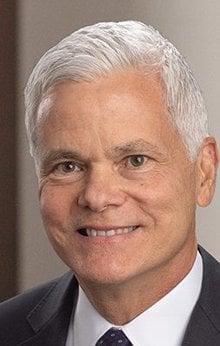
Doug, 61, is the archetypal relationship banker – a 35-year veteran of the firm who once considered a career in veterinary medicine.
He rose through the ranks to lead commercial banking, where revenues more than doubled during his tenure.
Jamie told Bloomberg early last year that Doug is “a great client guy and a culture carrier”.
Doug retains sole leadership of the Commercial & Investment Bank and plays a key role in overseeing a US$1.5tn Security and Resiliency Initiative, a programme closely aligned with the chief executive’s priorities.
“People took chances on me, including Jamie,” he said in 2019 when speaking to his alma mater – a remark that resonates differently now, with the most significant opportunity of his career within reach.

Golden handcuffs, longer game
A combined US$100m can secure a considerable amount of patience.
That is the sum JPMorgan has effectively committed to retaining four senior executives, according to a regulatory filing.
Doug and Troy are each set to receive US$30m, while Mary Erdoes, who continues to lead Asset & Wealth Management, and Jennifer Piepszak, who remains Chief Operating Officer, will each receive US$20m.
All four now report directly to Jamie.
The awards vest only if the bank achieves a 12% return-on-tangible-equity threshold and are subject to clawback provisions. The signal to the group is clear: remain in place and deliver.
This approach is consistent with JPMorgan’s playbook. As the largest US bank by market capitalisation – valued at more than US$890bn – it has spent years engineering a succession process designed to avoid disruption.
A deep leadership bench, combined with layered compensation structures and governance safeguards, reduces the risk of any unexpected outcome.
Boards across industries are following a similar pattern this year, from Domino’s to Nike, quietly assessing future leadership while incumbents remain in position.
At JPMorgan, the field has narrowed to two candidates with no fixed timeline. As Wells Fargo analyst Mike Mayo puts it: “It’s a question of timing more than anything.”
Company portals



Executives
Doug Petno
Co-president
Jamie Dimon
Chairman of the Board
Marianne Lake
CEO of Consumer & Community Banking

Mike Mayo
Analyst

Troy Rohrbaugh
Co-president