
WEF Davos 2026: Economic Disruption and Digital Change
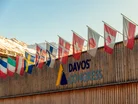
The World Economic Forum (WEF) has convened global leaders in Davos, Switzerland, since 1971 to address pressing global issues. The 56th Annual Meeting scheduled for the week of 19 January 2026 is expected to gather more than 2,000 participants from heads of state to business leaders.
Under the official theme “A Spirit of Dialogue”, the event is set to explore solutions for a world facing major structural change, a key concern for the financial technology sector that thrives on innovation amid disruption.
Reflecting on the 2025 meeting’s theme of “Collaboration for the Intelligent Age” provides context for the upcoming discussions. The programme focused on rebuilding trust, reimagining growth, investing in people, safeguarding the planet and industries in the intelligent age.
These conversations centred on AI digitalisation and the energy transition, all of which are core elements of the fintech industry.

“In this new, more uncertain era, dialogue is our greatest source of innovation and resilience.”
Angela Hultberg, Global Sustainability Director at Kearney, said: “I am more positive now than I was a week ago. I fully expected sustainability topics to be set aside, but this was not the case.” The sentiment of progress was shared by other leaders.
Jim Andrew, Chief Sustainability Officer at PepsiCo, said: “The themes of the week have been action and collaboration – how do we move faster and move together to make progress.”
Geopolitical tensions and green finance opportunities
Economic stability has strong links to sustainability, a topic with growing importance for the financial sector.
Sebastian Buckup, Managing Director and Nature and Climate Lead at the WEF, explains: “Green markets have quadrupled in size over the last few years. It's clearly a growth opportunity for many companies.”
- Around 3,000 leaders attended Davos 2025, including more than 50 heads of state
This presents a major opening for fintech firms specialising in sustainable finance, ESG reporting and green investment platforms.
However, Sebastian also notes the challenges: “There’s one type of challenge, of course, around political stability and geopolitical tensions. Long-term investment needs stable expectations.”
With global politics in flux, this stability is difficult to guarantee. For fintech companies, navigating international markets, regulatory hurdles and skills shortages adds further layers of complexity.
“Companies are dealing with lots of challenges in the execution of their green strategy,” Sebastian says.
“Leaders must adapt with urgency and collaboration to turn today’s turbulence into tomorrow’s resilience.”
Economic divergence and technological disruption
The WEF’s Chief Economists’ Outlook from September 2025 could indicate the economic conversations at Davos. The report notes that 72% of surveyed chief economists expect the global economy to weaken over the next year.
It also highlights that today’s disruptions are seen as structural, not cyclical, with long-term impacts on natural resources, technology trade and global economic institutions.
This environment of accelerating technological change and intensifying trade disruption is one where agile fintech companies could find opportunities. The report also warned that advanced and developing economies are on divergent growth paths.
“Companies are dealing with lots of challenges in the execution of their green strategy.”
“The contours of a new economic environment are already taking shape, defined by disruption across trade, technology, resources and institutions,” says Saadia Zahidi, Managing Director of the WEF.
Saadia adds: “Leaders must adapt with urgency and collaboration to turn today’s turbulence into tomorrow’s resilience.”
Setting the agenda through global dialogue
WEF events in late 2025 have helped shape the priorities for Davos 2026. The Sustainable Development Impact Meetings in September 2025 covered topics including carbon capture, sustainable finance and the AI trust crisis.
Similarly, the Global Future Councils meetings in October 2025 addressed changes in trade innovation for growth and cybersecurity. These subjects are deeply interconnected with the fintech industry, which is central to developing secure and innovative financial solutions.
The focus on dialogue and collaboration is seen as essential for progress.
Børge Brende, President and CEO at the World Economic Forum, said of the Dubai events: "In this new, more uncertain era, dialogue is our greatest source of innovation and resilience."
Reflecting on the impact of meetings, Børge says: “The conversations this week were consequential in shaping priorities for the months ahead.”
He adds that as the WEF looks toward the 2026 Annual Meeting, many of these discussions will continue to guide the agenda leading up to Davos.