Is Hybrid Work Holding Firm Over In-Office for Finance?
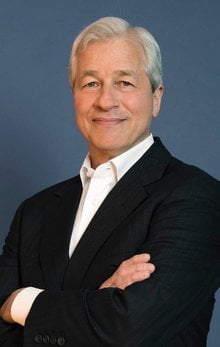
Jamie Dimon gives voice to a wider sense of executive frustration.
In audio that surfaced in early 2025, the JPMorgan Chase CEO can be heard taking aim at the vacant desks around him. "I come in, and where is everybody else?" he says, months before mandating a full five-day return to the office.
His remarks were the most prominent in a growing, two-year refrain.
Home Depot, Target, Microsoft, 3M and Intel all rolled out return-to-office directives with considerable publicity.
But zooming out from the headlines, the so-called return appears limited.
Across the US, the proportion of work carried out remotely has levelled off rather than declined – meaning the policies may be firm, but the data tells a different story.

Remote work has found a floor
The top-line number remains remarkably persistent.
In May, an average of 26% of paid full working days were carried out from home – virtually unchanged from 27% two years prior and down only slightly from 30% in 2022 – based on the monthly survey led by Stanford economist Nicholas Bloom and his co-authors.
Before the pandemic, that share hovered around 7%.
"The data does seem at odds with the narrative Dimon tells, where remote work is dead," says Emma Harrington, an economist at the University of Virginia who studies remote work.
Other indicators point in the same direction.
Kastle Systems, which monitors office access via keycard swipes, reports occupancy across 10 major cities as only marginally higher than a year ago.
Meanwhile, mobile location data from Placer.ai shows office visits in May were still about 32% below 2019 levels – an improvement of just three percentage points over the past year.
The disparity reflects a straightforward reality: the large firms dominating headlines represent only a small fraction of a 163-million-strong workforce.
Nearly two-thirds of employees remain fully on-site, around one in 10 are entirely remote and most of the remainder operate in hybrid arrangements.
Remote work has not disappeared. It has stabilised at a baseline.
The mandates lose to the calendar
The CEO pushing most forcefully for a return to the office are often from an older generation, shaped by a workplace centred on physical presence.
Research by Nicholas shows that employees at companies led by younger chief executives spend more time working remotely than those under older leadership.
"If you look at CEOs who were 40 or under during the pandemic, they're far more likely nowadays to have at least hybrid in their companies," Nicholas says.
"Older CEOs generationally are just less used to it."
That generational shift underpins his expectation that remote work will expand rather than contract. As older leaders step down, they are replaced by younger counterparts more comfortable managing distributed teams.
A similar dynamic is visible among newer firms.
Prithwiraj Choudhury, an economist at the London School of Economics, notes that high-growth startups are at the forefront of developing the management practices needed to sustain hybrid work.
"Some of these companies will scale up and become the next set of large companies," he says.
They bring those operating models with them as they grow. The office debate, in other words, may be settled less by any memo than by who is left in the room to write it.
What hybrid is quietly doing to people
Emma Harrington, an economist at the University of Virginia, does not expect a sharp rise in remote work, but anticipates a gradual increase as the underlying technology continues to improve.
The benefits are tangible, though unevenly distributed.
Her research with economist Matthew Kahn finds that access to remote work has helped more mothers remain in the workforce.
Meanwhile, US Labor Department data shows a notable increase in employment among people with disabilities since 2020 – likely reflecting greater workplace flexibility.
The drawbacks are less immediately visible. In a study published this month in the journal Science, Harrington and two co-authors conclude that remote work has contributed to higher levels of loneliness and mental strain among Americans.
Early evidence also indicates it may be affecting the career trajectories of recent graduates, who typically learn by working alongside more experienced colleagues.
The time saved on commuting is obvious. The erosion of skills is not.
Gaps can form gradually, only becoming apparent when those capabilities are required.
“You’re not building the skills that you would have in person,” Emma says, “and that kind of slow burn can make people less productive in the long run.”
Jamie and others may continue to dominate the conversation, and some employees will return – nudged by promotion structures that reward visibility and policies that shape new hires.
Yet the underlying trend has barely shifted over the past two years. The debate over the office will not be decided by volume.
It will be resolved, quietly, by the generation that ultimately takes charge.



Executives

Emma Harrington
Economist
Jamie Dimon
Chairman of the Board

Nicholas Bloom
Professor