
ING: What Can We Learn From Sustainable Finance Growth?
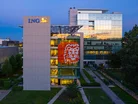
Sustainable finance has seen an increase as more attention has been placed on businesses to reduce carbon emissions and improve green practices by 2030.
Sustainable finance is used to support businesses that are making a positive impact on the environment and society, with the ultimate goal of achieving net zero.
But how is sustainable finance currently defined?
Sustainable finance refers to investment decisions in the financial sector that take into consideration environmental, social and governance factors.
These investments aim to support sustainable economic activities and projects.
Some of these considerations include:
- Climate change mitigation and adaption
- Inequality and inclusiveness
- Management structures
- Pollution prevention
- Labour relations
- Circular economy
Sustainable finance also looks to create transparency when it comes to risks related to ESG factors that may have an impact on the financial system.
It aims to diminish these risks through governing finance and corporate actors.
Inside sustainable finance
Sustainable finance is a broad term for several things, including green bonds, social impact investing, ESG-focused asset management, sustainable banking and climate finance.
These financial investments are usually designed to support projects and businesses that have a positive impact on society and the environment.
Green finance vs transition finance
Sustainable finance encompasses two main objectives: green and transition finance.
Green finance is the provision of economic backing to current environmentally friendly projects.
Transition finance focuses on private investments to projects that reduce greenhouse gas emissions and the transition to a climate neutral or sustainable economy.
This method of financing is urgently needed to reduce gas emissions by 55% by 2030, according to the European Commission.
Recently named as a top company for sustainable finance, global asset management firm BlackRock offers a range of services, each with the primary goal of targeting sustainable finance.
The aim of sustainable finance is to incentivise sustainable practices with the end goal of a more resilient, inclusive and sustainable economy.
What methods are being used to improve sustainable finance practices?
BlackRock offers four distinct products in its sustainable investment portfolio.

BlackRock’s Screened service allows clients to avoid certain issuers or business activities that have certain E,S or G principles.
Similarly, the company also offers investors the opportunity to support businesses with improved ESG principles under its Uplift service.
Its Thematic service targets investments for businesses whose practices encourage long-term sustainability outcomes.
Its final strategy is to maximise positive environmental impact by generating additional measurable sustainability outcomes – the Impact strategy.
The latest sustainable finance data
A recent report from sustainable banking leader ING states that its issuance of sustainable finance investments has reached a total of US$432bn, a 2.8% increase from Q2 2023 and a 1.8% increase from Q2 in 2024.
The bank reports a global increase in sustainable finance transactions; however, APAC has seen a particular spike.
EMEA transactions continue to lead the way with contributions totalling 61%.

Out of the nine sustainable financing options offered by ING, the lead contender remains sustainability-linked bonds.
The highest amount recorded by ING was in 2021, with the bank lending US$982tn in sustainability-linked loans.
The second and third most popular products remain green bonds and green loans.
There was a 48% increase in the number of green loan transactions and a 17% rise in volume compared to Q2 2024.
Jacomijn Vels, Global Head of Sustainable Solutions Group at ING, says: "We aim to accelerate the flow of capital towards the energy transition by offering strategic support to our clients - and the sectors they operate in.
"The resilient performance on volume mobilised over the years - despite volatile markets - underpins the strong track record we have built."
After significant geopolitical changes originating from the US, sustainable finance in that region has slowed significantly, according to the report.
Regional investors are cautious due to the US decisions to cut back on climate reporting and federal involvement in DEI policies.