
How CRED Founder Kunal Shah Could Reshape WhatsApp

WhatsApp has confirmed the appointment of Kunal Shah, Founder of Indian fintech firm Cred, as its new CEO, taking over from Will Cathcart.
Will, who has led WhatsApp for more than seven years, will move into a different position within parent company Meta.
Commenting on the leadership change, Meta CEO Mark Zuckerberg said Will’s next role will focus on developing “new products from the ground up”.
He added that he was “excited” to continue working closely with him.
“WhatsApp is in the strongest position it’s ever been — and that felt like the right moment to step back,” Will says.
“We scaled end-to-end encrypted messaging to more than three billion people. We brought it to group chats, companion devices, new surfaces — and defended people’s right to a private conversation across the globe.”

Kunal’s tenure in the fintech industry
Before stepping into the CEO role, Kunal founded CRED, a prominent Indian fintech platform offering services across payments, lending, insurance, wealth management and lifestyle.
The company reports an average of 17 million monthly users and handles over 40% of India’s credit card bill payments.
Discussing Kunal’s new role, Mark says: “Kunal built CRED into one of India’s most important technology companies, and he brings the kind of builder mentality and global perspective that will serve him well in running the world’s biggest messaging app.”
Kunal’s move to WhatsApp comes at a pivotal moment for both CRED and Meta.
This week, CRED revealed it had secured approximately US$900m in a Series H funding round led by Meta. The investment values the business at more than US$4bn and grants Meta a minority stake in the fintech company.
As he steps down from his role as CEO of CRED, Kunal said he is “extremely grateful to our members, partners, regulators and investors” who helped build the company.
He adds: “While it’s come very far, the delta between WhatsApp today and its full potential is massive. I look forward to working with Mark, Chris [Cox, Meta’s Chief Product Officer], and the leadership across Meta for the next step in WhatsApp’s journey. Will, thank you for scaling something the world relies on quietly, and for making this transition smooth.”
WhatsApp’s future growth strategies
Meta acquired WhatsApp in 2014 for US$19bn, and the platform has since grown into one of the world’s leading messaging services, now boasting more than three billion monthly active users.
In May, Meta outlined plans to introduce subscription offerings across WhatsApp, Instagram and Facebook as it looks to reduce its dependence on advertising revenue.
Neil Shah, Vice President of Research at Counterpoint Research, notes that while WhatsApp is currently the most widely used communication platform globally, it has yet to establish itself as a major player in commerce and payments.
He adds that one of Kunal’s primary challenges will be evolving WhatsApp from a messaging-first service into a conversational commerce platform, similar to China’s WeChat.
According to Neil, Kunal’s background in building and scaling payments ecosystems in India makes him the “best choice” to lead WhatsApp through this transition.
Company portals



Executives

Kunal Shah
CEO
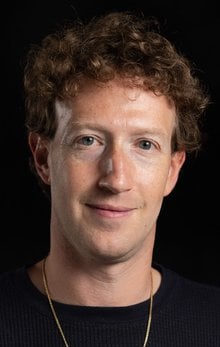
Mark Zuckerberg
CEO
Neil Shah
Co-Founder & Vice President of Research